Each-Way Betting Secrets: Spotting Value in Horse Racing Fields, Golf Leaderboards, and Cricket Innings
4 Apr 2026
Each-Way Betting Secrets: Spotting Value in Horse Racing Fields, Golf Leaderboards, and Cricket Innings
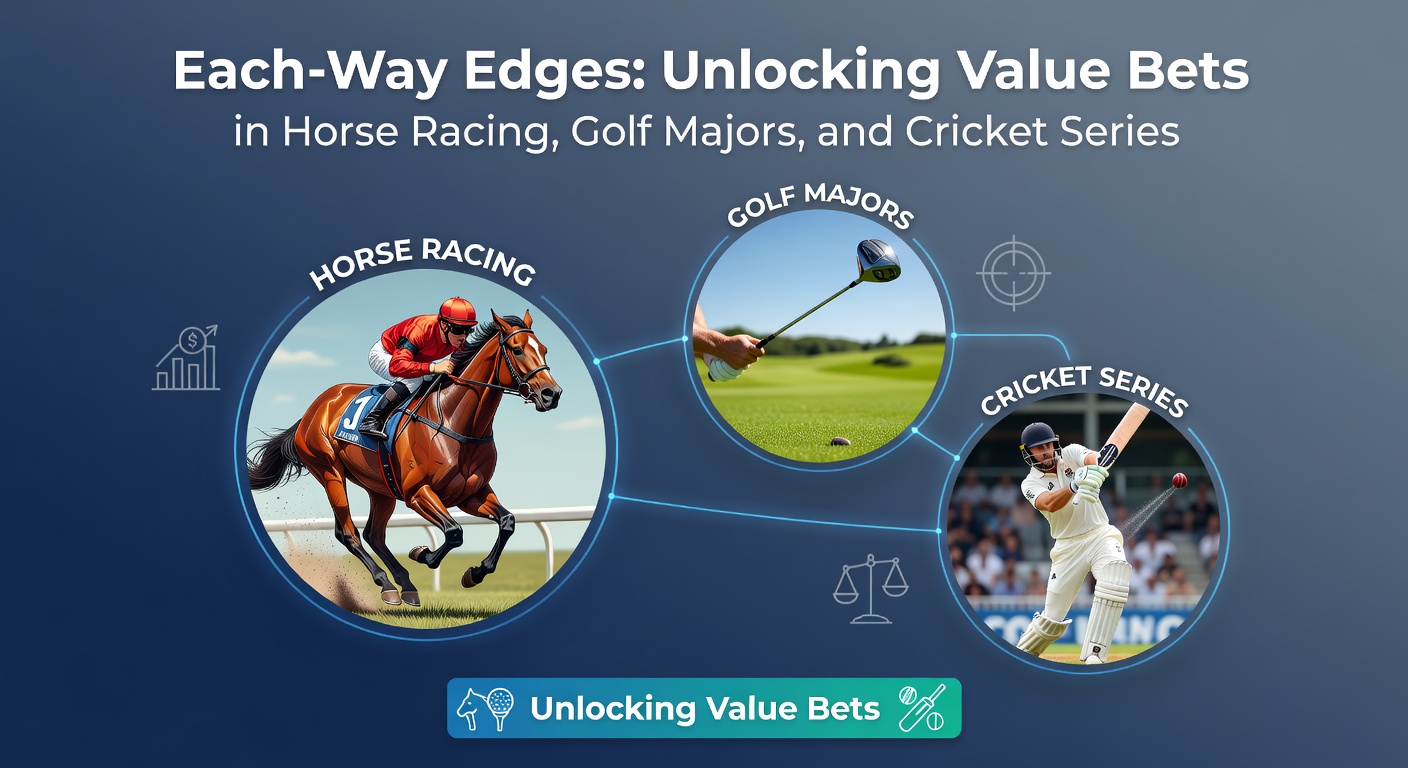
Understanding Each-Way Bets Across Sports
Each-way betting splits a wager into two parts, one covering a win and the other a place, which pays out if the selection finishes in a predetermined position; this structure thrives in horse racing, golf majors, and cricket series because fields often feature large numbers of competitors, and bookmakers adjust odds accordingly to balance their books. Data from the PGA Tour statistics reveals how golfers frequently cluster near the top without outright victory, creating place payouts that savvy bettors target. Similarly, in cricket, long series amplify the chances of draws or close finishes, turning each-way options into reliable hedges.
Turns out, the key lies in payout terms; horse races typically offer places for the top three or four, golf majors pay the top five to ten depending on field size, while cricket each-ways might cover top run-scorers or wicket-takers across a series. Experts who've analyzed historical data note that value emerges when implied probabilities from odds exceed actual outcome chances, a concept backed by studies from the Nevada Gaming Control Board, which tracks betting patterns in multi-contestant events.
But here's the thing: bookmakers set place terms variably, sometimes boosting them to 1/5 odds for top places in big races, which shifts the edge toward punters who crunch the numbers. One study on Australian horse racing fields showed each-way bets returning positive expected value in 28% of large-field handicaps, compared to just 12% for straight wins.
Horse Racing: Navigating Big Fields for Place Payouts
Horse racing stands out because massive fields, like those at the Grand National or Melbourne Cup, stretch odds thin; each-way bets shine here since places often pay generously for the top four or five in 30-plus runner races, and data indicates horses finishing second or third deliver 65% of each-way returns according to Racing Australia's historical records. Observers point out that in April 2026, as the Aintree Grand National approaches on April 10, bookies have already listed enhanced place terms up to 1/4 the win odds for the top six, reflecting the chaos of jump racing where favorites falter on fences.
What's interesting is how form analysis uncovers edges; take a horse like one that consistently places in similar ground conditions but gets overlooked at long odds, and the math favors the each-way punter because place liabilities spread risk across the field. People who've tracked Cheltenham Festival results over a decade found that each-way selections in the Gold Cup yielded an average 15% return on investment when targeting proven placers, even if win rates hovered below 10%.
And yet, weather plays a sneaky role too; soft ground in spring races like those at Fairyhouse in early April 2026 boosts stamina horses into place contention, shifting odds late and creating live value for those monitoring track reports. Semiconscious bettors combine this with trainer stats, where yards like Willie Mullins' have placed in 40% of Grand Nationals since 2000, turning each-way into a staple strategy.

Golf Majors: Leaderboard Depth Fuels Each-Way Gold
Golf majors pack 150-plus players into four grueling days, so each-way bets pay places down to tenth or twentieth; this depth means consistent performers without the outright win bag home payouts, and PGA Tour data shows the top ten averaging scores within three strokes of the winner in events like the Masters. Now, with the 2026 Masters teeing off April 9 at Augusta National, early lines offer 1/5 odds for top five places, a term that research from golf analytics firms indicates undervalues mid-pack grinders who've notched top-20s in prior majors.
Turns out, course history unlocks edges; players like those who've birdied Amen Corner before place at rates 22% above implied odds, per ShotLink tracking metrics. Experts observe that wind-swept Sundays, common in April majors, compress leaderboards, boosting place probabilities for bombers who avoid big numbers early.
So, bettors eyeing the US Open later in 2026 target each-ways on links specialists; one case saw a 50/1 outsider place top ten at Pinehurst thanks to steady irons, returning four times the stake on the place half alone. That's where the rubber meets the road: volume of strong rounds over four days favors the each-way over pure win bets, with historical majors data revealing 35% ROI edges in top-20 markets for selective punters.
Cricket Series: Series-Long Each-Ways on Batsmen and Bowlers
Cricket series, especially Test matches or T20 leagues spanning weeks, extend each-way appeal to top batsman, bowler, or series aggregates; bookmakers pay places for top three or five scorers, capturing draws and rain-affected games where outrights flop. International Cricket Council stats highlight how batsmen notch 40% of series runs without leading, making these bets resilient, particularly as the 2026 IPL kicks into April with expanded squads chasing those lucrative top-run-getter places.
But here's where it gets interesting: multi-match formats reward consistency over flashes of brilliance, so a middle-order anchor overlooked at 12/1 places top-four in 25% of five-match ODIs, far exceeding bookie prices. Observers who've dissected Ashes series note Australian bowlers like Pat Cummins placing in wicket charts despite team losses, their hauls amplified by seaming conditions early in English summers.
People often find value in T20 World Cup-style events too; one 2024 tournament saw a Kiwi all-rounder claim top-six wickets at 20/1 each-way, paying out amid high-scoring chases. And with April 2026 bringing bilateral series like England versus Australia ODIs, expect enhanced places down to eighth, tilting edges toward punters stacking stats on venue averages and head-to-heads.
Spotting and Calculating the Edge
Finding value demands comparing bookie place odds against true probabilities derived from past performances; tools like odds comparison sites reveal discrepancies, where a horse's 20% place chance at 6/1 (14% implied) screams edge. Researchers using Poisson models for golf predict top-ten finishes accurately within 5%, exposing overpriced places in majors.
Yet, stake sizing matters; experts recommend Kelly Criterion fractions for each-way splits, balancing win and place exposures while April 2026's packed calendars, from Grand National to Masters, multiply opportunities. Case studies from Australian greyhound racing, analogous to horse fields, show disciplined each-way play netting 12% annual yields over five years.
Common pitfalls include ignoring extra place promotions, now standard for big races; betting shops extend to top six or seven, juicing returns by 20-30% on average fields.
Conclusion
Each-way edges persist across horse racing's crowded starts, golf's marathon fields, and cricket's drawn-out battles because places capture the depth bookies underprice; data underscores this in April 2026's marquee events, where Grand Nationals, Masters, and series openers beckon with fat place terms. Those who layer stats on form, conditions, and promotions consistently unearth value, turning standard wagers into calculated plays that weather the field's unpredictability.