27 Jul 2026
Sponsorship Ripple Effects: Mapping Brand Investments in Football, Esports, and Darts
 Brand investments in major sports create measurable shifts that extend beyond single markets, and sponsorship patterns in football frequently influence deal structures in esports and darts. Data from industry tracking services shows that football clubs secured over 60 percent of new European sponsorship agreements in the first half of 2026, with many agreements containing clauses that permit activation rights in digital and emerging sports verticals. Those clauses have led several betting operators and consumer brands to extend their football packages into esports leagues by July 2026. Researchers tracking deal flow note that when a football sponsor gains exposure through stadium signage and broadcast integrations, the same brand often receives preferential pricing and integration options in esports tournaments that share overlapping audiences. This overlap appears most clearly in titles such as League of Legends and Counter-Strike, where football sponsors have added team jerseys and in-game branding within the past eighteen months.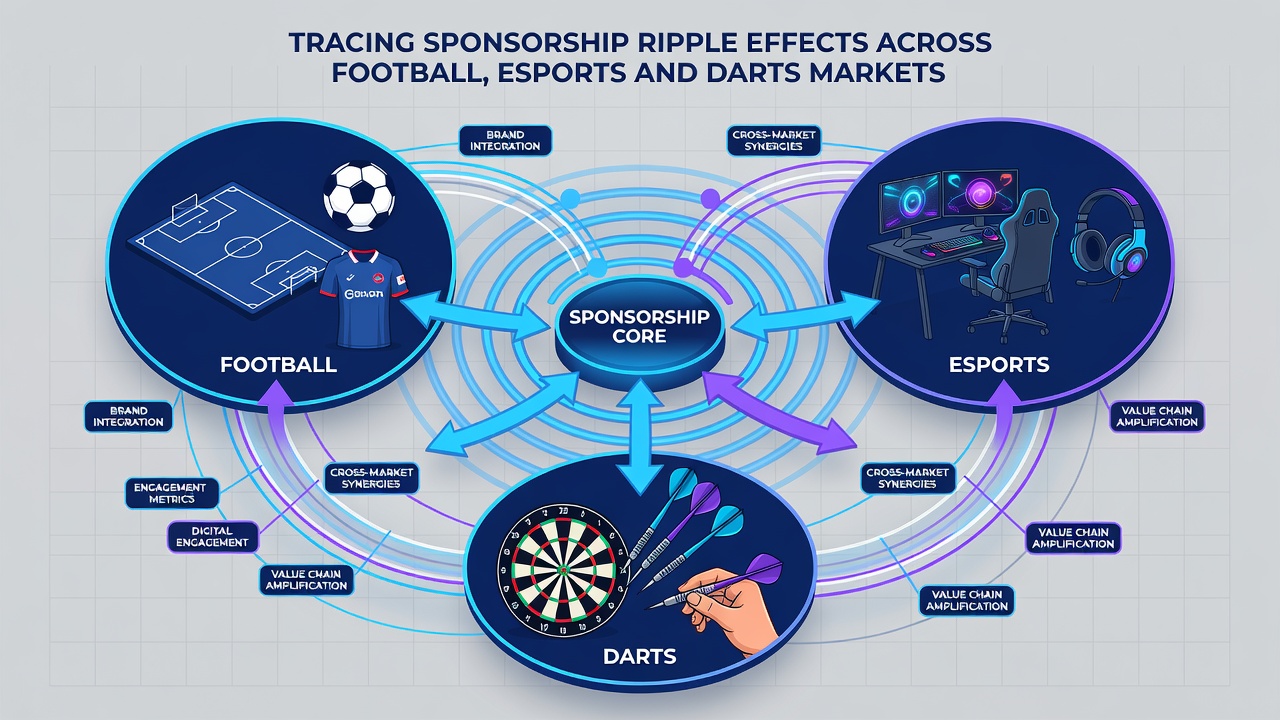
Brand investments in major sports create measurable shifts that extend beyond single markets, and sponsorship patterns in football frequently influence deal structures in esports and darts. Data from industry tracking services shows that football clubs secured over 60 percent of new European sponsorship agreements in the first half of 2026, with many agreements containing clauses that permit activation rights in digital and emerging sports verticals. Those clauses have led several betting operators and consumer brands to extend their football packages into esports leagues by July 2026. Researchers tracking deal flow note that when a football sponsor gains exposure through stadium signage and broadcast integrations, the same brand often receives preferential pricing and integration options in esports tournaments that share overlapping audiences. This overlap appears most clearly in titles such as League of Legends and Counter-Strike, where football sponsors have added team jerseys and in-game branding within the past eighteen months.Football as the Primary Driver
Football remains the largest single source of sponsorship revenue among the three markets, yet its influence now functions less as an isolated sector and more as an entry point. Figures released by the European Sponsorship Association indicate that average annual values for top-tier football shirt deals reached €45 million in 2025, with several contracts including performance bonuses tied to digital engagement metrics. Sponsors meeting those metrics gain automatic first refusal rights when the rights holder launches esports or niche sport activations. Observers tracking these contracts report that the inclusion of esports clauses increased by 28 percent between 2024 and 2026. The result is a pipeline effect: a brand that begins with pitch-side hoardings during Premier League matches can move into arena activations at major esports events without negotiating a separate master agreement. Darts organisers have begun adopting similar structures, offering multi-year packages that bundle televised PDC events with smaller online qualifier streams popular among younger demographics.Esports Adopts Football-Style Activation Models
Esports leagues have incorporated activation tactics first tested in football, including augmented-reality overlays and sponsor-branded player interviews during timeouts. A 2025 study conducted by researchers at the University of Southern California documented a 34 percent rise in sponsor recall when esports broadcasts used these football-derived formats compared with standard static logos. The same study found that brands already present in football markets achieved higher recall scores than new entrants, suggesting audience familiarity transfers across platforms. By July 2026 several esports tournament organisers had formalised this transfer by creating joint sponsorship decks with football rights holders, allowing a single payment to cover both live football and selected esports events.