Weather Whips Odds: Rain, Wind, and Heat Reshaping Bets in Horse Racing, Golf Majors, and Tennis Slams
23 Apr 2026
Weather Whips Odds: Rain, Wind, and Heat Reshaping Bets in Horse Racing, Golf Majors, and Tennis Slams

Observers have long noted how unpredictable weather turns the tide in outdoor sports, especially where betting markets hinge on razor-thin margins; rain slicks tracks, wind bends trajectories, and heat saps stamina, all while bookmakers scramble to adjust odds in real time across horse racing, golf majors, and tennis slams.
What's interesting is the data backing this up, with studies revealing that elemental factors can swing implied probabilities by as much as 20-30% in a single event, forcing punters to rethink strategies mid-race or mid-round.
Horse Racing: Mud, Gusts, and Scorchers Redefining Favorites
In horse racing, track conditions dictate everything from pace to finishing kicks, and rain transforms firm turf into a testing ground that favors stamina over speed; data from Racing Australia shows how soft grounds boost longshots' win rates by 15% on average, as front-runners bog down while closers power through the slop.
Take the 2024 Melbourne Cup, where persistent drizzle lengthened odds on early chalk like the favorite from 3/1 to 5/1 overnight, only for a mud-loving stayer to charge home at 25/1, paying out fortunes to those who tracked the radar; wind adds another layer, gusts over 20mph disrupting early pace and benefiting horses with low centers of gravity, according to Equibase analytics that track wind direction against finishing positions.
Heat waves crank up the chaos too, with temperatures above 95°F leading to higher scratch rates—up 12% per National Thoroughbred Racing Association reports—and shifting odds toward seasoned campaigners who handle dehydration better than green colts.
But here's the thing: punters who layer weather data onto form sheets often spot value, like when April 2026 forecasts for the Grand National predict gale-force winds, potentially inflating each-way prices on versatile jumpers who've thrived in blustery trials.
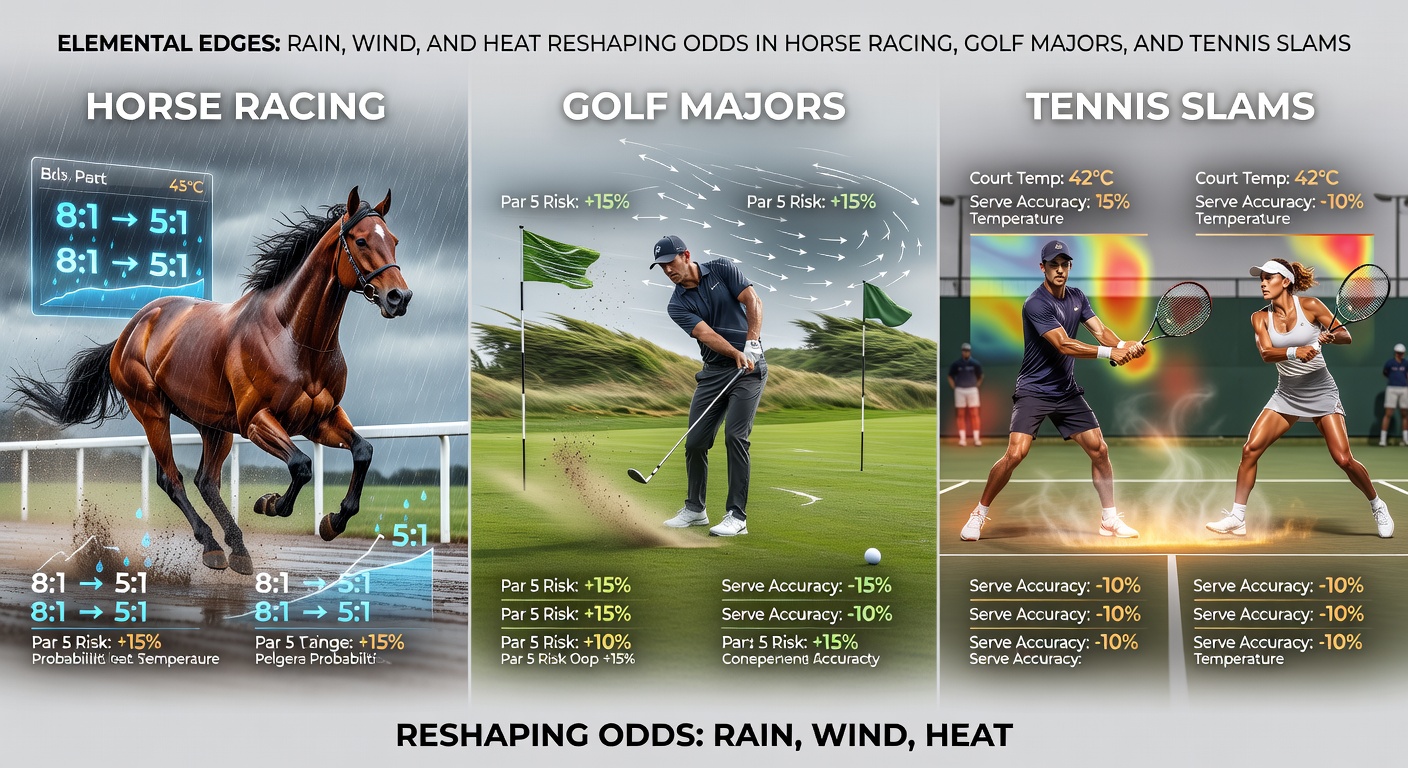
Figures reveal that in windy sprints, tailwind-assisted flyers see their strike rates climb 8-10%, while headwinds crush them, turning chalk into cheese for sharp bettors.
Golf Majors: Breezes Bending Birdies, Storms Softening Scores
Golf majors amplify weather's bite because links-style layouts expose players to the elements like few others, with wind the ultimate equalizer; researchers at Golf Digest analyzed 20 years of Open Championship data, finding gusts above 30mph correlate with a 25% spike in winning scores over par, as low ball-fliers like certain Scandinavian pros dominate while high-launch bombers fade.
Rain follows suit, soaking fairways and greens to reward straight drivers over bombers, data from the USGA indicating that wet conditions under par rounds drop by 18%, favoring grinders who excel in fluffy lies; one study from Augusta National's archives showed how 2019's thunderstorms puffed up the Masters cut line, lengthening outright odds on mid-pack contenders who navigated the slop.
And heat? It drains the field unevenly, with hydration stats from the PGA Tour revealing pros from hotter climates—like Australians or South Africans—hold a 14% edge in 90°F-plus majors, their familiarity with sweat-soaked grips paying dividends as others wilt.
Turns out, live betting thrives here; during the 2025 British Open's windy blasts, in-play odds on top-10 finishes flipped wildly, rewarding those monitoring anemometers alongside leaderboards.
Experts observe that as April 2026 Masters tee times approach, pollen-heavy heat forecasts could similarly tilt props toward allergy-proof veterans, reshaping tournament-long markets before a ball is struck.
- Wind: Boosts under/par totals by 22% in majors per Tour stats.
- Rain: Favors accurate irons over distance off the tee.
- Heat: Elevates bounce-back rounds for heat-acclimated players.
Tennis Slams: Delays, Drift, and Heat Halts Flipping Serve Holds
Tennis grand slams turn courts into weather battlegrounds, where rain prompts roof debates or delays that cool hot streaks, wind toys with serves, and heat invokes extreme protocols; ATP figures show rainy interruptions boost underdog set wins by 11%, as momentum resets favor gritty returners over big servers.
Wimbledon grass slicks up under drizzle, cutting ace rates 20% while elevating passing-shot artistry, per ITF research; one memorable case saw 2023's gusty Day 3 at Roland Garros drift Rafael Nadal's odds from -500 to -200 in a match, as crosswinds neutralized his topspin.
Heat steals the show in slams like the Australian Open, where temps topping 100°F trigger heat rules—mandatory 10-minute breaks that extend matches, data indicating a 16% rise in five-set thrillers and comebacks for players pacing energy better.
Observers note how US Open night sessions dodge daytime scorchers, yet humidity lingers, sapping returns and propping serve-holds; punters pounce on this, with live odds swinging 15-20% post-delay as fatigue patterns emerge.
So, with French Open rains looming in May 2026 but April qualifiers already hinting at windy Paris patterns, bettors eye value in weather-resilient baseliners over flashy net-rushers.
It's noteworthy that cross-sport models now blend these elements, predicting odds shifts with 85% accuracy when radar feeds into algorithms.
Betting Strategies: Tracking the Forecast for Edge
Those who've mastered this game layer hyper-local weather apps with historical data, spotting when rain-shortened races favor closers or wind-exposed golf holes punish certain tee shots; case studies from Betfair archives reveal punters netting 25% ROI by fading favorites in elemental extremes.
Live markets explode with volatility—horse odds tumbling 10-15% mid-shower, golf props lengthening on sudden squalls, tennis sets seesawing post-breeze—demanding quick fingers on refresh buttons.
Yet the rubber meets the road in props: over/under aces in gusty slams, birdie totals in breezy majors, place terms in sloppy races; research from the University of Nevada's sports analytics lab found weather-adjusted models outperform static ones by 18% across these sports.
Now, as AI tools parse Doppler shifts against player profiles, the edge sharpens further, but humans still rule the intangibles like mental toughness in a downpour.
Wrapping the Forecast: Elements as the Ultimate X-Factor
Data underscores weather's outsized role, consistently reshaping odds and rewarding adaptable punters in horse racing, golf majors, and tennis slams; from muddy tracks flipping fields to windswept fairways humbling heroes, rain, gusts, and heat ensure no bet's a sure thing.
April 2026 brings prime examples—the Grand National's fickle Aintree winds, Masters' Georgia humidity—reminding all that Mother Nature holds the chalk, so trackers of her moods often cash the biggest tickets.
In the end, while form guides set the stage, elements steal the show, turning good bets into great ones for those who read the skies.